


Industrial Temperature Measurement Solutions in Cincinnati, OH
Temperature measurement is a core process variable in chemical manufacturing, water and wastewater treatment, food and beverage production, energy systems, and other industrial operations where small deviations can affect quality, safety, and up-time. At M. L. Johnson Company, we provide industrial temperature measurement solutions in Cincinnati, OH, backed by more than 60 years of process instrumentation experience.
Since 1964, our engineering-led team has helped facilities select, configure, integrate, calibrate, and support instrumentation around actual operating conditions. As an experienced industrial instrumentation supplier, we focus on application fit, control-system compatibility, and long-term reliability rather than simply supplying a sensor from a catalog.
Temperature Measurement Starts With the Application
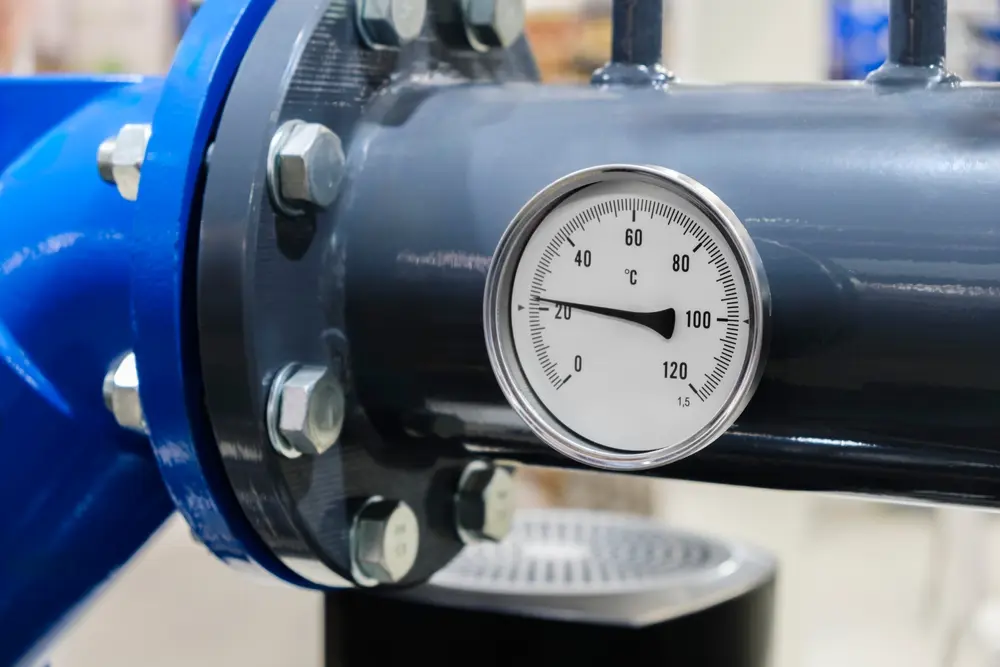
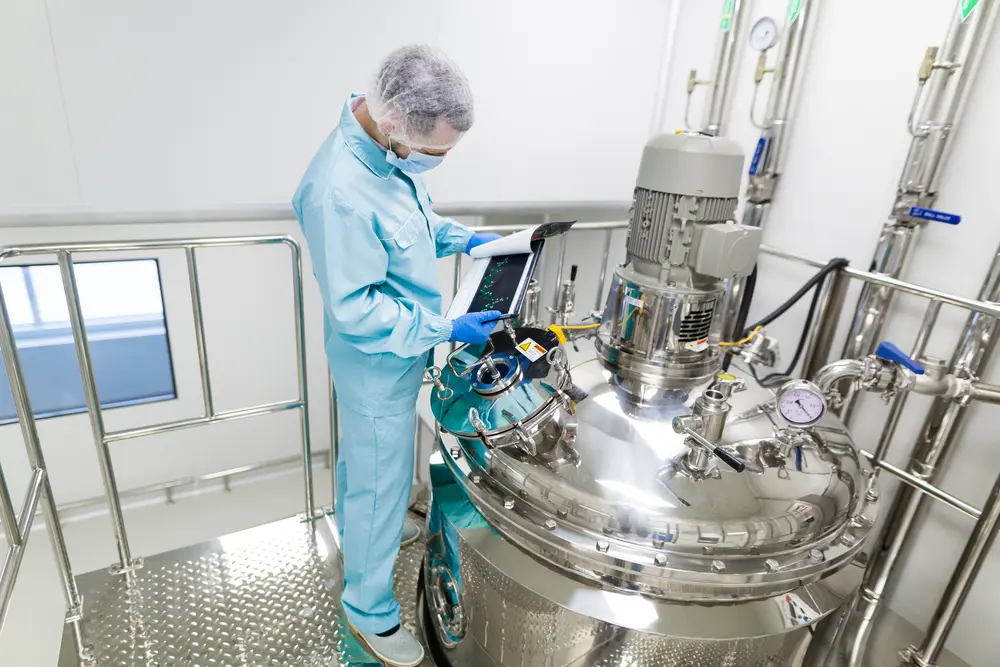
A temperature sensor is only useful when it is suited to the environment in which it operates. Process temperature range, response time, pressure, vibration, chemical exposure, insertion length, thermowell design, accuracy requirements, and mounting conditions can all influence which sensing technology should be specified. Choosing equipment without evaluating those variables can lead to slow response, premature sensor failure, unstable readings, or measurement drift that affects the rest of the process.
Our process begins with application engineering. We look at what is being measured, how quickly the temperature can change, what conditions surround the sensing point, and how the measurement will be used by operators or the control system. That lets us recommend a solution around the process instead of forcing the process to accommodate a generic instrument.
Advanced Temperature Measurement Capabilities
 RTDs and Thermocouples for Industrial Processes
RTDs and thermocouples each have advantages, but they are not interchangeable. RTDs are often selected when repeatability, stability, and tighter accuracy are priorities, while thermocouples can be better suited to wider or higher temperature ranges and rugged industrial environments.
RTDs and Thermocouples for Industrial Processes
RTDs and thermocouples each have advantages, but they are not interchangeable. RTDs are often selected when repeatability, stability, and tighter accuracy are priorities, while thermocouples can be better suited to wider or higher temperature ranges and rugged industrial environments.
We help customers evaluate sensor type, element configuration, sheath material, connection style, insertion depth, and transmitter requirements before finalizing a specification. For applications involving aggressive chemicals, high-temperature vessels, elevated pressures, or demanding manufacturing environments, those details directly influence measurement reliability and sensor life.
 Thermowells Engineered for Process Conditions
In many process applications, the sensing element requires protection from pressure, velocity, corrosion, or mechanical damage. A properly engineered thermowell allows a temperature sensor to interface with the process while protecting the element and making future removal or replacement more practical.
Thermowells Engineered for Process Conditions
In many process applications, the sensing element requires protection from pressure, velocity, corrosion, or mechanical damage. A properly engineered thermowell allows a temperature sensor to interface with the process while protecting the element and making future removal or replacement more practical.
Thermowell design should account for process connection, material compatibility, insertion length, fluid velocity, pressure, temperature, and mechanical stresses. Our team considers those operating conditions as part of the complete temperature measurement assembly so the protective hardware is matched to the process rather than treated as an afterthought.
 Temperature Transmitters and Signal Conditioning
The sensing element is only the first part of the measurement chain. Temperature data still needs to reach a PLC, SCADA platform, DCS, recorder, or other control device in a form that can be interpreted reliably.
Temperature Transmitters and Signal Conditioning
The sensing element is only the first part of the measurement chain. Temperature data still needs to reach a PLC, SCADA platform, DCS, recorder, or other control device in a form that can be interpreted reliably.
We can help configure temperature transmitters and associated instrumentation for common industrial communication and signal requirements, including 4-20 mA HART and other supported protocols. Proper scaling, sensor configuration, fault behavior, wiring, and communication setup are addressed before or during commissioning so operators receive meaningful data rather than simply a raw signal.
 PLC, SCADA, and DCS Integration
Modern process control depends on consistent communication between field instruments and central automation systems. A correctly selected temperature sensor can still create operational problems if its transmitter is incorrectly ranged, wired, scaled, or configured within the control architecture.
PLC, SCADA, and DCS Integration
Modern process control depends on consistent communication between field instruments and central automation systems. A correctly selected temperature sensor can still create operational problems if its transmitter is incorrectly ranged, wired, scaled, or configured within the control architecture.
Our turnkey integration capabilities extend from primary sensing selection through PLC, SCADA, and DCS connectivity. We work with plant I&C teams to address signal requirements, device parameters, communication protocols, and commissioning details, helping reduce troubleshooting during startup and making the temperature measurement point easier to incorporate into existing automation systems.
 High-Temperature and High-Pressure Applications
Some of the most demanding temperature applications are found in reactors, process vessels, steam systems, heat exchangers, ovens, furnaces, and pressurized piping. These environments require careful attention to sensor construction, response time, metallurgy, pressure rating, and installation geometry.
High-Temperature and High-Pressure Applications
Some of the most demanding temperature applications are found in reactors, process vessels, steam systems, heat exchangers, ovens, furnaces, and pressurized piping. These environments require careful attention to sensor construction, response time, metallurgy, pressure rating, and installation geometry.
Our team evaluates the complete operating envelope rather than specifying solely around normal process temperature. Startup conditions, cleaning cycles, process excursions, ambient exposure, and mechanical stress can all influence which sensor and assembly will deliver dependable service over time.
 Temperature Measurement for Aggressive Chemical Media
Chemical compatibility matters anywhere a temperature sensor or thermowell is exposed to corrosive or aggressive media. Choosing the wrong wetted material can shorten service life, compromise measurement quality, and create additional maintenance work.
Temperature Measurement for Aggressive Chemical Media
Chemical compatibility matters anywhere a temperature sensor or thermowell is exposed to corrosive or aggressive media. Choosing the wrong wetted material can shorten service life, compromise measurement quality, and create additional maintenance work.
We review process chemistry alongside temperature and pressure when helping specify industrial temperature instrumentation. This approach is particularly important for chemical processing facilities throughout the Cincinnati and Northern Kentucky industrial corridor, where instrumentation often has to operate reliably in challenging media while meeting facility safety and control requirements.
 Calibration and Measurement Confidence
Temperature drift can develop gradually, which makes it difficult to detect from normal operator observation alone. An instrument may still provide a believable reading while moving far enough from the true process temperature to affect batch quality, efficiency, equipment protection, or regulatory documentation.
Calibration and Measurement Confidence
Temperature drift can develop gradually, which makes it difficult to detect from normal operator observation alone. An instrument may still provide a believable reading while moving far enough from the true process temperature to affect batch quality, efficiency, equipment protection, or regulatory documentation.
Calibration verification helps confirm that the measurement point continues to perform within the expected range. We provide field support for calibration, configuration, and troubleshooting so plant personnel can determine whether a problem originates with the sensing element, transmitter, wiring, installation, or broader process conditions.
Onsite Field Support & Technical Services
Onsite Support Across Greater Cincinnati
Some measurement problems are difficult to solve remotely because the installation itself is part of the problem. Sensor placement, thermowell geometry, access limitations, vibration, ambient heat, and nearby piping or equipment can all affect how a temperature point performs.
Read More
Our local engineering presence allows us to provide onsite field assessment, calibration, and commissioning support throughout Greater Cincinnati, Northern Kentucky, and the surrounding Tri-State industrial corridor. That proximity can reduce delays when a critical temperature point needs to be evaluated or production equipment needs to be returned to service.
Safety, SIL, and Hazardous-Area Considerations
Temperature instrumentation may be part of a safety-related loop or installed in an area where flammable gases, vapors, or other hazards require appropriately certified equipment. In those environments, device selection must account for more than temperature range and accuracy.
Read More
We can help identify instrumentation aligned with applicable SIL requirements, hazardous-area classifications such as Class I, Division 1 or Division 2, and broader facility safety expectations. Final suitability always depends on the complete system design and installation requirements, which is why we approach safety-related applications as an engineering problem rather than a checkbox.
Temperature Measurement Within a Larger Instrumentation Strategy
Temperature rarely operates as an isolated process variable. It is often evaluated alongside pressure, flow, analytical measurements, and industrial level measurement to give operators a complete picture of process conditions.
Read More
M. L. Johnson Company supports that broader instrumentation environment. In addition to temperature technologies, we provide level measurement solutions and process level sensors in the Ohio Valley for applications involving aggressive chemicals, viscous liquids, bulk solids, vapor, foam, turbulence, and other challenging conditions. Working with one regional instrumentation team can make it easier to coordinate device selection, communications, calibration, and support across multiple measurement points.
Why Plant Teams Choose M. L. Johnson Company
Since 1964, we have supported industrial customers with measurement and control solutions selected around real applications rather than generic specifications. Our experience spans flow, pressure, temperature, level, analytical instrumentation, control valves, gas detection, automation, and system integration, giving us the ability to look at the whole measurement architecture when solving a plant problem.
We also bring local field knowledge, technical support, and more than six decades of industrial instrumentation experience to facilities throughout Ohio, Kentucky, Indiana, and West Virginia. That combination of engineering depth and regional accessibility helps plant teams reduce installation friction, shorten troubleshooting time, and make better long-term instrumentation decisions.
Our capabilities include:
- RTD and thermocouple selection
- Temperature transmitters
- Thermowell application support
- High-temperature and high-pressure measurement
- Chemical-service instrumentation
- PLC, SCADA, and DCS integration
- 4-20 mA HART configuration
- Calibration verification
- Onsite field assessment
- Commissioning and startup support
- Hazardous-area instrumentation
- SIL-related device selection support
We evaluate temperature range, required accuracy, response time, stability, process conditions, and installation environment. RTDs are often preferred for repeatability and precision, while thermocouples can be better suited to wider or higher temperature ranges.
Yes, we support integration with industrial control architectures using applicable signals and protocols such as 4-20 mA HART. We can assist with configuration, scaling, wiring, and commissioning requirements.
Yes, we provide onsite assessment, calibration verification, troubleshooting, and commissioning throughout the Greater Cincinnati and Northern Kentucky industrial corridor. Local support is especially valuable when installation conditions need to be evaluated directly.
Yes, we can help identify instrumentation with appropriate hazardous-area certifications for applications such as Class I, Division 1 or Division 2 environments. Final selection depends on the facility’s complete engineering and safety requirements.
Yes, we can evaluate the sensor, transmitter, thermowell, wiring, configuration, and installation conditions to help identify the source of the problem. The issue may be related to calibration, placement, mechanical design, or the sensing technology itself.
Build Temperature Measurement Around the Real Process
Accurate temperature data depends on more than selecting a sensor with the right range. At M. L. Johnson Company, we combine application engineering, sensing technology selection, transmitter configuration, control-system integration, calibration, and local field support to help industrial facilities maintain reliable measurement throughout the life of the instrument. Our team has also served process industries since 1964, giving us the technical depth to evaluate demanding applications across the Cincinnati and broader Tri-State region. Just contact us today to review a new temperature application, troubleshoot an existing measurement point, or specify instrumentation built around your actual process conditions.