


Industrial Pressure Measurement Solutions in Cincinnati, OH
Pressure measurement sits at the center of process control, equipment protection, and plant safety. When a transmitter drifts, a diaphragm seal fails, or a pressure spike damages the sensing element, operators can lose visibility into a critical process condition very quickly. At M. L. Johnson Company, we provide industrial pressure measurement solutions in Cincinnati, OH, for facilities that need dependable sensing across corrosive, high-temperature, high-vacuum, and high-vibration applications.
Since 1964, our team has helped plants specify, configure, assemble, test, and support process pressure instrumentation around real operating conditions rather than defaulting to standard transmitter packages. As an experienced industrial instrumentation supplier, we focus on measurement stability, severe-service isolation, and long-term reliability.
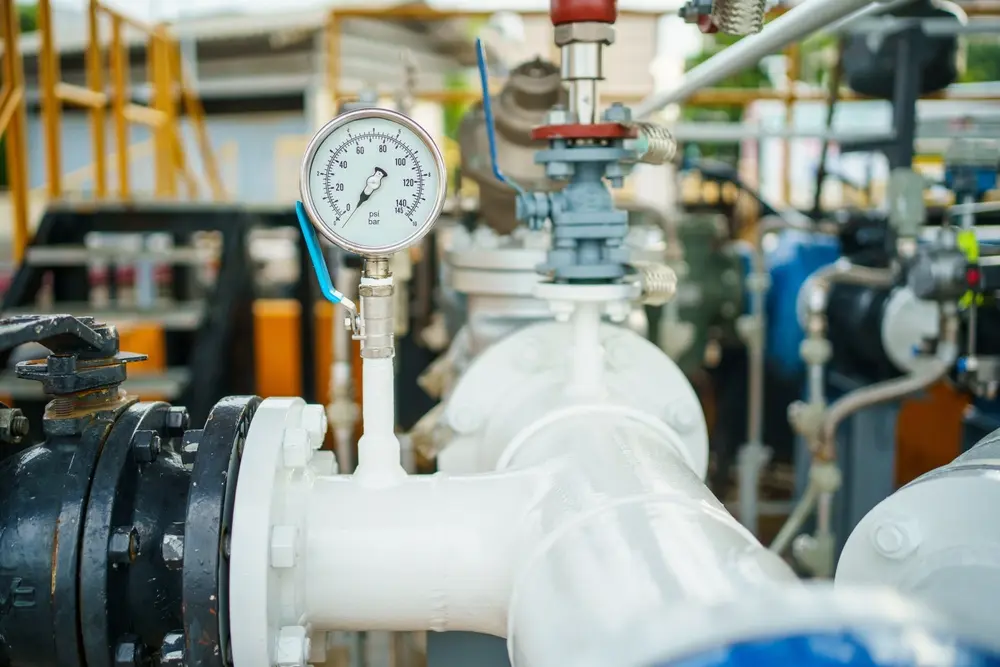

Pressure Measurement Starts With the Process, Not the Part Number
A pressure transmitter may look straightforward on a datasheet, but actual plant conditions can make the application far more demanding. Pressure spikes, pulsation, line vibration, thermal cycling, vacuum service, corrosive media, and plugged impulse lines can all shorten instrument life or create measurement errors that are difficult to diagnose.
We evaluate the full application before recommending equipment. That includes normal and maximum pressure, process temperature, media compatibility, ambient conditions, mounting orientation, impulse line design, vacuum conditions, and the way the measurement will be used by the control system. This engineering-first approach helps us specify industrial pressure sensors that remain stable instead of requiring repeated replacement or recalibration.
Engineered Pressure Measurement Capabilities
 Severe-Service Diaphragm Seal Systems
Direct-contact pressure transmitters are not always the right choice for viscous, corrosive, sanitary, or high-temperature processes. Diaphragm seals isolate the sensing instrument from the process while still transmitting pressure through a fill fluid, but their performance depends heavily on how the seal system is engineered.
Severe-Service Diaphragm Seal Systems
Direct-contact pressure transmitters are not always the right choice for viscous, corrosive, sanitary, or high-temperature processes. Diaphragm seals isolate the sensing instrument from the process while still transmitting pressure through a fill fluid, but their performance depends heavily on how the seal system is engineered.
We assemble severe-service diaphragm seal systems in-house, including vacuum filling and custom material selection. Depending on process chemistry and mechanical requirements, wetted materials may include Hastelloy, Tantalum, Monel, Gold plating, or other compatible options. We also consider seal diameter, capillary length, fill fluid, process connection, and operating temperature so the assembly responds correctly rather than introducing unnecessary lag or drift.
 Engineering Around Thermal Expansion and Head Effect
Diaphragm seal systems can create measurement error when thermal expansion, elevation differences, and capillary effects are not accounted for. A long capillary run exposed to changing ambient temperature can shift the measurement, while vertical installation can create a head-pressure offset that changes the transmitter’s zero point.
Engineering Around Thermal Expansion and Head Effect
Diaphragm seal systems can create measurement error when thermal expansion, elevation differences, and capillary effects are not accounted for. A long capillary run exposed to changing ambient temperature can shift the measurement, while vertical installation can create a head-pressure offset that changes the transmitter’s zero point.
Our engineering process includes those variables. We evaluate capillary response time, fill-fluid characteristics, thermal effects, and head pressure so the completed assembly is configured around the installation as it will actually exist in the plant. That level of detail is especially important in high-vacuum and high-temperature applications where fill-fluid behavior can have a major impact on measurement stability.
 Smart Pressure Transmitters and Digital Communication
Modern pressure measurement is no longer limited to a single analog output. Smart transmitters can provide diagnostics, digital configuration, local indication, and process data that helps maintenance teams understand instrument health as well as the pressure value itself.
Smart Pressure Transmitters and Digital Communication
Modern pressure measurement is no longer limited to a single analog output. Smart transmitters can provide diagnostics, digital configuration, local indication, and process data that helps maintenance teams understand instrument health as well as the pressure value itself.
We support transmitters using HART, FOUNDATION Fieldbus, and Profibus where appropriate for the application. Our team can configure ranges, damping, alarm behavior, local displays, engineering units, and communication parameters before delivery, helping reduce startup time and configuration work in the field.
 Multi-Variable Pressure and Temperature Measurement
Some process applications benefit from measuring more than pressure at a single point. Multi-variable instrumentation can combine pressure and temperature data for density compensation, flow calculations, steam service, gas applications, or other control strategies where process conditions are interdependent.
Multi-Variable Pressure and Temperature Measurement
Some process applications benefit from measuring more than pressure at a single point. Multi-variable instrumentation can combine pressure and temperature data for density compensation, flow calculations, steam service, gas applications, or other control strategies where process conditions are interdependent.
We help determine when multi-variable sensing provides a real operational advantage and when a simpler configuration makes more sense. The goal is not to add complexity for its own sake, but to provide the data the control system actually needs while keeping maintenance and troubleshooting manageable.
 Explosion-Proof and Safety-Rated Instrumentation
Pressure instruments are frequently installed in areas where flammable gases, vapors, or other hazardous materials require additional electrical and mechanical protection. In these applications, enclosure approvals, process containment, transmitter construction, and safety-system requirements all need to align with the facility’s engineering standards.
Explosion-Proof and Safety-Rated Instrumentation
Pressure instruments are frequently installed in areas where flammable gases, vapors, or other hazardous materials require additional electrical and mechanical protection. In these applications, enclosure approvals, process containment, transmitter construction, and safety-system requirements all need to align with the facility’s engineering standards.
We can support SIL-2 and SIL-3 rated device selection where applicable, along with explosion-proof equipment designed for Class I, Division 1 or Division 2 environments. Our application work also considers broader OSHA, ASME, and EPA-related containment and safety requirements as they apply to the specific facility and process.
 Protecting Instruments From Pressure Spikes and Pulsation
Pressure spikes can damage sensing diaphragms, shorten transmitter life, and create erratic readings that make process control unstable. Pulsating pumps, compressors, rapid valve action, and hydraulic systems can all expose instruments to dynamic pressure conditions far beyond the apparent normal operating range.
Protecting Instruments From Pressure Spikes and Pulsation
Pressure spikes can damage sensing diaphragms, shorten transmitter life, and create erratic readings that make process control unstable. Pulsating pumps, compressors, rapid valve action, and hydraulic systems can all expose instruments to dynamic pressure conditions far beyond the apparent normal operating range.
We review those transient conditions during specification instead of sizing only around steady-state pressure. Depending on the application, the solution may include a more suitable pressure range, protective accessories, damping, remote seals, snubbers, or a different mounting strategy to reduce mechanical stress on the sensing element.
 High-Temperature and High-Vacuum Applications
High heat creates several pressure measurement challenges at once. Elevated process temperature can exceed transmitter limits, affect seal fill fluid, accelerate material degradation, and introduce thermal error if the instrument is mounted too close to the process.
High-Temperature and High-Vacuum Applications
High heat creates several pressure measurement challenges at once. Elevated process temperature can exceed transmitter limits, affect seal fill fluid, accelerate material degradation, and introduce thermal error if the instrument is mounted too close to the process.
High vacuum can be equally demanding because fill-fluid vaporization, diaphragm behavior, and capillary design all become more critical. We engineer around these conditions by selecting suitable seal assemblies, materials, fill fluids, and installation geometry so the measurement system remains responsive and stable across the required operating envelope.
Onsite Field Support & Technical Services
Complete Loop Bench Testing Before Delivery
A pressure assembly should not arrive at the plant unverified, especially when the installation is tied to a shutdown window or critical process loop. Finding out during commissioning that the zero is wrong, span is misconfigured, or the seal assembly is not responding correctly creates unnecessary downtime.
Read More
Our pressure transmitter and seal assemblies are bench tested before delivery. Depending on the project, that can include pressure testing, zero and span calibration, communication verification, local display setup, and final certification so the unit is prepared for immediate field installation.
Quick-Turn Custom Seal Assembly and Local Inventory
When a pressure transmitter or remote seal fails unexpectedly, long replacement lead times can keep a process offline far longer than the repair itself should require. That is why local inventory and in-house assembly capability matter.
Read More
We can rapidly assemble and test custom pressure transmitter and diaphragm seal combinations for facilities throughout Cincinnati, Dayton, Northern Kentucky, and the surrounding industrial corridor. Our local presence helps reduce the time between identifying the problem and putting a properly configured replacement back into service.
Supporting PLC, SCADA, and DCS Integration
Pressure measurement is only useful when the signal reaches the control architecture accurately. Incorrect scaling, transmitter range, digital communication settings, or alarm configuration can make a mechanically sound instrument appear unreliable.
Read More
We support integration with PLC, SCADA, and DCS environments and can assist with 4-20 mA signals, HART, FOUNDATION Fieldbus, and Profibus communications. Our engineers understand how the transmitter fits into the broader loop, which helps us troubleshoot whether an issue originates in the sensor, transmitter, wiring, control-system input, or process itself.
Why Plant Teams Choose M. L. Johnson Company
M. L. Johnson Company has served industrial customers since 1964, giving our team more than 60 years of experience with pressure, flow, level, temperature, analytical instrumentation, control valves, and automation. As a pressure transmitter supplier, we focus on application fit, assembly quality, and long-term performance rather than simply shipping hardware.
That combination of engineering depth and local availability gives plant teams a practical way to solve both routine and severe-service pressure measurement problems without relying on generic transmitter packages.
Our pressure measurement capabilities include:
- Smart pressure transmitters
- Severe-service diaphragm seals
- In-house vacuum filling
- Hastelloy, Tantalum, Monel, Gold-plated options
- High-temperature and high-vacuum applications
- Multi-variable pressure and temperature sensing
- HART, FOUNDATION Fieldbus, Profibus configuration
- SIL-rated device selection
- Class I, Division 1 and Division 2 applications
- Pressure testing and calibration
- Complete bench-tested assemblies
- Local quick-turn field support
A diaphragm seal may be appropriate for corrosive, viscous, high-temperature, sanitary, or plugging media. We evaluate process conditions, compatibility, response time, and installation geometry before recommending a seal system.
Yes, we assemble and vacuum-fill custom diaphragm seal systems in-house. We can also select specialized wetted materials and configure the transmitter around the application before testing the complete assembly.
Yes, we work with HART, FOUNDATION Fieldbus, and Profibus-capable transmitters where supported. We can assist with range setup, diagnostics, display configuration, and communication parameters.
Yes, we can help specify pressure instrumentation for Class I, Division 1 and Division 2 applications as well as SIL-related safety requirements. Final selection depends on the facility’s complete classification and engineering standards.
We account for fill-fluid behavior, capillary length, temperature exposure, head effect, and response time. These variables are considered during assembly and configuration so the system performs correctly in the actual installation.
Yes, our assemblies can be pressure tested, zero and span calibrated, configured, and certified before delivery. This helps reduce commissioning work and installation delays in the field.
Build Pressure Measurement Around the Actual Process
Reliable industrial pressure measurement depends on more than transmitter accuracy alone. Seal design, material compatibility, thermal behavior, dynamic pressure conditions, communication setup, and installation geometry all influence whether the instrument delivers trustworthy data over time. At M. L. Johnson Company, we combine more than 60 years of experience with in-house diaphragm seal assembly, smart transmitter configuration, bench testing, hazardous-area expertise, and rapid regional support. So contact our team today to review a difficult pressure application, replace a failed assembly, or specify process pressure instrumentation engineered for the conditions your plant actually faces.