


Industrial Control Valves Solution in Cincinnati, OH
Control valves sit at the point where process decisions become physical action. When a valve is oversized, poorly matched to the fluid, or improperly actuated, the result can be unstable control, excessive noise, cavitation, premature trim wear, or costly leakage. At M. L. Johnson Company, we provide industrial control valves in Cincinnati, OH, for plants that need precise flow control, dependable actuation, and application-specific engineering.
Since 1964, our team has supported process industries throughout the Tri-State region with valve sizing, severe-service selection, automation, assembly, testing, and local technical support built around real operating conditions. As an experienced industrial control valve supplier, we focus on loop stability, material compatibility, and long-term reliability rather than off-the-shelf guesswork.
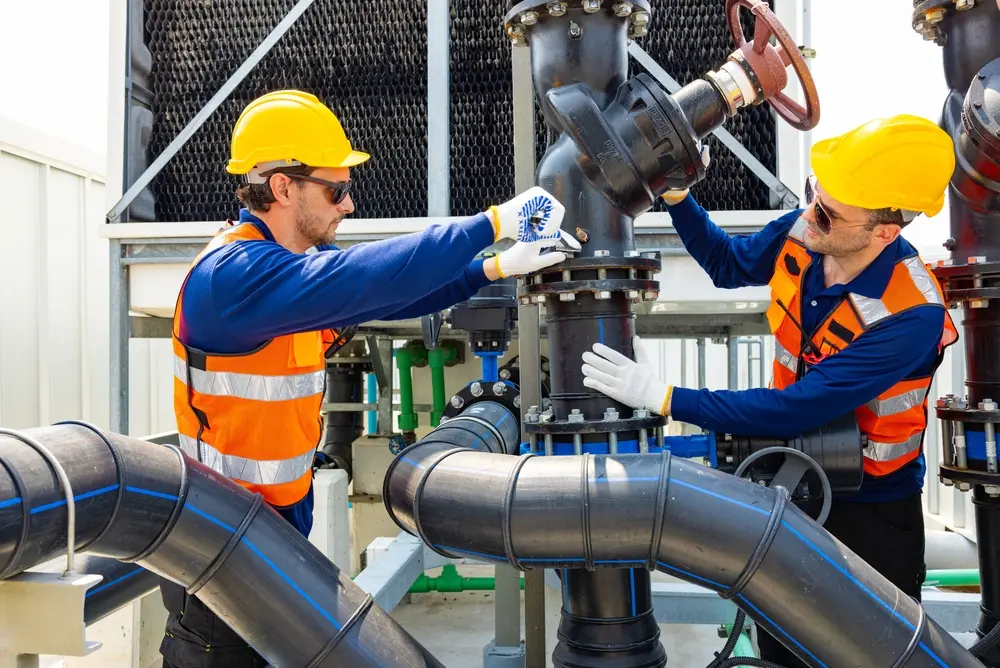
Control Valve Selection Starts With Process Data
Selecting a control valve based only on line size is one of the quickest ways to create poor loop performance. A valve may physically fit the piping and still be wrong for the application if it cannot maintain adequate control across minimum, normal, and peak flow conditions.
Our application engineers evaluate fluid properties, inlet and outlet pressures, temperature, required flow range, pressure drop, velocity, and operating scenarios before recommending a valve. We calculate the required Cv and review rangeability, noise potential, flashing, and cavitation risk so the selected assembly can control the process effectively instead of operating near its limits.
Engineered Control Valve Solutions & Technologies
 Correct Sizing Helps Prevent Hunting and Premature Wear
Oversized valves often spend most of their operating life barely open, where small stem movements can create large process changes. That can cause hunting, oscillation, accelerated seat wear, poor controllability, and constant adjustments from the control system.
Correct Sizing Helps Prevent Hunting and Premature Wear
Oversized valves often spend most of their operating life barely open, where small stem movements can create large process changes. That can cause hunting, oscillation, accelerated seat wear, poor controllability, and constant adjustments from the control system.
Undersized valves create a different set of problems by restricting maximum flow or forcing the valve to remain nearly full open. Our process valve solutions are sized around actual operating conditions so the valve has enough usable travel to regulate the process smoothly across the expected production range.
 Trim Characteristics Matched to the Control Strategy
The correct trim characteristic is just as important as the valve body’s pressure and temperature rating. Linear, equal-percentage, and quick-opening trims respond differently to changes in valve position, so the wrong choice can reduce control stability even when the valve is otherwise properly sized.
Trim Characteristics Matched to the Control Strategy
The correct trim characteristic is just as important as the valve body’s pressure and temperature rating. Linear, equal-percentage, and quick-opening trims respond differently to changes in valve position, so the wrong choice can reduce control stability even when the valve is otherwise properly sized.
We look at the relationship between valve travel, system pressure drop, and desired flow response before specifying trim. Equal-percentage trim may make sense for processes with changing pressure conditions and broad operating ranges, while linear or quick-opening characteristics may be more appropriate for other control or on-off applications.
 Control Valve Actuation and Automation
A properly sized valve still depends on reliable actuation to position accurately when the control system calls for a change. Our control valve actuation capabilities include pneumatic and electro-pneumatic assemblies designed to work with modern plant automation architectures.
Control Valve Actuation and Automation
A properly sized valve still depends on reliable actuation to position accurately when the control system calls for a change. Our control valve actuation capabilities include pneumatic and electro-pneumatic assemblies designed to work with modern plant automation architectures.
We can integrate smart positioners, limit switches, solenoids, and related accessories based on the required control philosophy. HART and applicable Fieldbus communication can also be incorporated where supported, allowing I&C teams to access diagnostics, position feedback, configuration data, and maintenance information through the plant’s existing control infrastructure.
 Fail-Safe Configuration for Critical Process Loops
Many process applications require the valve to move to a defined position if instrument air, electrical power, or control signal is lost. Selecting the correct fail-open, fail-closed, or fail-in-place strategy requires understanding what the process should do during an abnormal condition.
Fail-Safe Configuration for Critical Process Loops
Many process applications require the valve to move to a defined position if instrument air, electrical power, or control signal is lost. Selecting the correct fail-open, fail-closed, or fail-in-place strategy requires understanding what the process should do during an abnormal condition.
Our engineers evaluate the operational and safety consequences of a loss of control before configuring the actuator and accessories. Fail-safe solenoids, spring-return actuators, position feedback, and other components can then be specified to support the plant’s control philosophy and safety requirements.
 Severe-Service Valves for Difficult Media
Abrasive slurries, high-pressure steam, corrosive chemicals, and flashing liquids can destroy standard valve trim quickly. In these applications, metallurgy, trim geometry, velocity management, and pressure staging become critical to service life.
Severe-Service Valves for Difficult Media
Abrasive slurries, high-pressure steam, corrosive chemicals, and flashing liquids can destroy standard valve trim quickly. In these applications, metallurgy, trim geometry, velocity management, and pressure staging become critical to service life.
We work with specialized materials and engineered trim options for severe-service conditions, including Hastelloy, Monel, hardened alloys, and Stellite-facing where appropriate. Material selection is based on corrosion resistance, erosion exposure, temperature, pressure, and process chemistry rather than simply choosing the most expensive alloy available.
 Reducing Cavitation, Flashing, and Excessive Noise
Cavitation can occur when local pressure inside the valve falls below the liquid’s vapor pressure and then recovers downstream. The resulting vapor-bubble collapse can damage trim, generate severe noise and vibration, and shorten valve life substantially.
Reducing Cavitation, Flashing, and Excessive Noise
Cavitation can occur when local pressure inside the valve falls below the liquid’s vapor pressure and then recovers downstream. The resulting vapor-bubble collapse can damage trim, generate severe noise and vibration, and shorten valve life substantially.
Our sizing process evaluates pressure recovery and cavitation potential before equipment is selected. Depending on the application, we may recommend staged pressure reduction, specialized anti-cavitation trim, changes in valve style, or other design approaches that reduce destructive energy inside the valve.
 High-Pressure Steam and Utility Applications
Steam control presents its own engineering challenges because velocity, pressure drop, temperature, noise, and erosion can all become significant at the valve. A poorly selected valve may operate loudly, wear rapidly, or fail to maintain the expected downstream conditions.
High-Pressure Steam and Utility Applications
Steam control presents its own engineering challenges because velocity, pressure drop, temperature, noise, and erosion can all become significant at the valve. A poorly selected valve may operate loudly, wear rapidly, or fail to maintain the expected downstream conditions.
We size steam valves around both normal and extreme operating cases, paying particular attention to outlet velocity and pressure ratio. This allows us to recommend valve body, trim, actuator sizing, and materials that are better suited for sustained utility service.
Turnkey Assembly, Testing & Field Support
Turnkey Valve Assembly and Bench Testing
A valve should not arrive at the plant as a collection of components that still need to be assembled and configured during a shutdown. Planned outages are already compressed, and field personnel should not have to spend valuable hours discovering that an actuator stroke or positioner setup is incorrect.
Read More
This preparation helps reduce installation friction and gives plant teams a valve assembly that is much closer to plug-and-play when the outage or project reaches the installation stage. Our turnkey assembly process can include:
- Valve and actuator assembly
- Stroking and travel verification
- Smart positioner calibration
- Limit switch setup
- Solenoid configuration
- Fail-action verification
- Pressure testing
- Communication setup where applicable
- Final bench testing before shipment
Integration With PLC, SCADA, and DCS Systems
Control valves are the final control elements in automated loops, so they must work correctly with the instrumentation and control system upstream. Incorrect signal scaling, positioner configuration, or feedback setup can create instability even when the mechanical valve itself is sound.
Read More
Our team understands the full loop, including transmitters, controllers, valve positioners, actuators, and control logic. That system-level perspective helps us troubleshoot whether a process issue is coming from the valve, the actuator, the signal, or the control strategy rather than replacing hardware unnecessarily.
Local Support Across the Tri-State Manufacturing Corridor
When a critical control valve fails, long lead times can turn a component problem into a production outage. Our regional presence helps us respond quickly to facilities throughout Cincinnati, Northern Kentucky, and the surrounding Ohio, Kentucky, and Indiana manufacturing corridor.
Read More
We maintain access to commonly needed valve components, assemblies, and technical resources to help customers address urgent needs. Local engineering support also means we can visit the facility, review the application, and work directly with plant personnel when the problem cannot be solved from a datasheet or phone call.
Why Choose M. L. Johnson Company?
M. L. Johnson Company has served industrial customers since 1964, giving our team more than 60 years of experience with process measurement, control, and automation. We approach control valves as engineered process components, not commodity hardware, and we take responsibility for understanding how each assembly will operate inside the customer’s system.
That combination helps Plant Engineers, I&C Technicians, and Operations Managers reduce guesswork during specification and improve the likelihood that the valve performs correctly from startup through long-term operation.
Our capabilities include:
- Valve sizing and Cv calculations
- Trim selection and characteristic matching
- Pneumatic & electro-pneumatic actuation
- Smart positioners (HART & Fieldbus)
- Severe-service metallurgy selection
- Anti-cavitation & noise attenuation
- Fail-safe loop configuration
- Turnkey assembly and stroking
- Bench testing and calibration
- PLC, SCADA, and DCS integration
- Outage planning and valve prep
- Local field support across OH, KY, IN
We evaluate flow rate, pressure drop, temperature, fluid properties, line conditions, and minimum, normal, and maximum operating cases. From there, we calculate the required Cv and review rangeability, velocity, noise, and cavitation risk before selecting the valve.
Yes, we provide complete control valve actuation packages that can include pneumatic actuators, smart electro-pneumatic positioners, limit switches, solenoids, and related accessories. Assemblies can be configured and tested before shipment.
Yes, we can provide positioners and accessories with HART or supported Fieldbus communication where appropriate. We also assist with setup and integration into existing PLC, SCADA, and DCS environments.
Yes, we engineer severe-service valve solutions using appropriate trim designs and materials such as Hastelloy, Monel, hardened alloys, or Stellite-facing when the application calls for them. Selection depends on chemistry, pressure, temperature, and erosion conditions.
We evaluate pressure recovery, vapor pressure, velocity, and process conditions to determine the severity of the cavitation risk. Solutions may include anti-cavitation trim, staged pressure reduction, a different valve style, or other application-specific changes.
Yes, our turnkey preparation can include stroking, positioner calibration, pressure testing, fail-action verification, and accessory setup. This helps reduce commissioning work and surprises during installation.
Engineer the Valve Around the Process, Not the Pipe Size
Control valve performance affects loop stability, equipment life, product consistency, energy use, and plant uptime, so specification deserves more than a line-size assumption. At M. L. Johnson Company, we combine more than 60 years of application experience with valve sizing, severe-service engineering, control valve actuation, smart positioning, system integration, assembly, and bench testing for industrial facilities throughout the Cincinnati and Tri-State region. So whether you’re replacing a problematic valve, planning an outage, or engineering a new process loop, contact our team today to review the application and specify a valve solution built for the way your process actually operates.