


Industrial Level Measurement Solutions in Cincinnati, OH
Reliable level measurement is not optional when tank inventory, pump protection, process safety, and regulatory performance depend on accurate data. At M. L. Johnson Company, we provide industrial level measurement solutions in Cincinnati, OH, for Plant Engineers, I&C Technicians, and Operations Managers working with demanding liquid and bulk-solid applications.
Since 1964, our engineering-led team has helped industrial facilities specify, configure, integrate, calibrate, and commission measurement technologies suited to real process conditions. We evaluate media characteristics, vessel geometry, pressure, temperature, buildup, foam, vapor, and control-system requirements before recommending a device, because the right level instrument starts with the application, not the catalog.
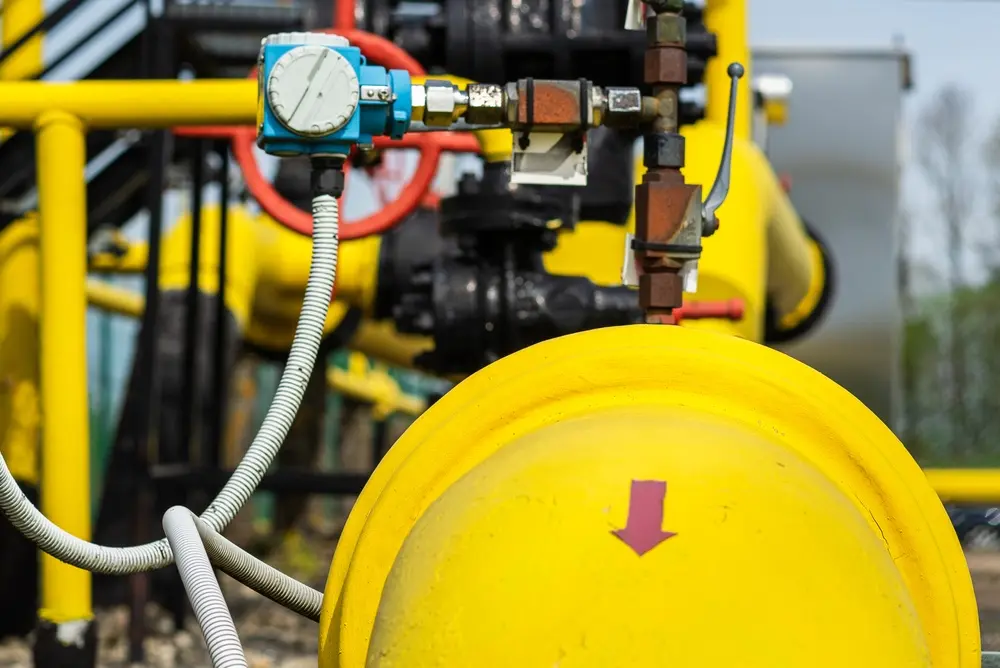
Level Measurement Engineered Around the Process
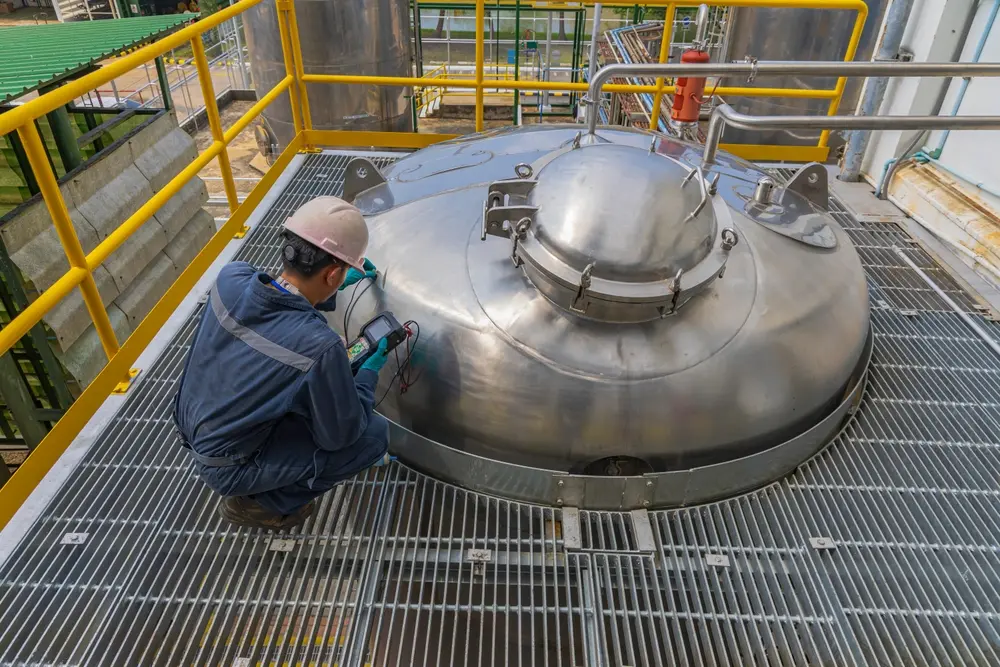
A level transmitter that performs well in a clean water tank may be completely wrong for a foaming chemical vessel, high-pressure reactor, slurry application, or powder silo. Standardized sensor selection often creates problems because level measurement is affected by dielectric properties, density, conductivity, agitation, vapor space, temperature, pressure, material buildup, and vessel internals.
Our approach begins with application engineering. We evaluate the process medium, operating range, vessel dimensions, nozzle configuration, environmental exposure, required accuracy, and control objectives before selecting a technology. That process helps reduce nuisance readings, measurement drift, false echoes, and premature instrument failure while giving plant personnel a measurement point they can actually trust.
Advanced Level Measurement Technologies
 Guided Wave Radar for Challenging Liquid Applications
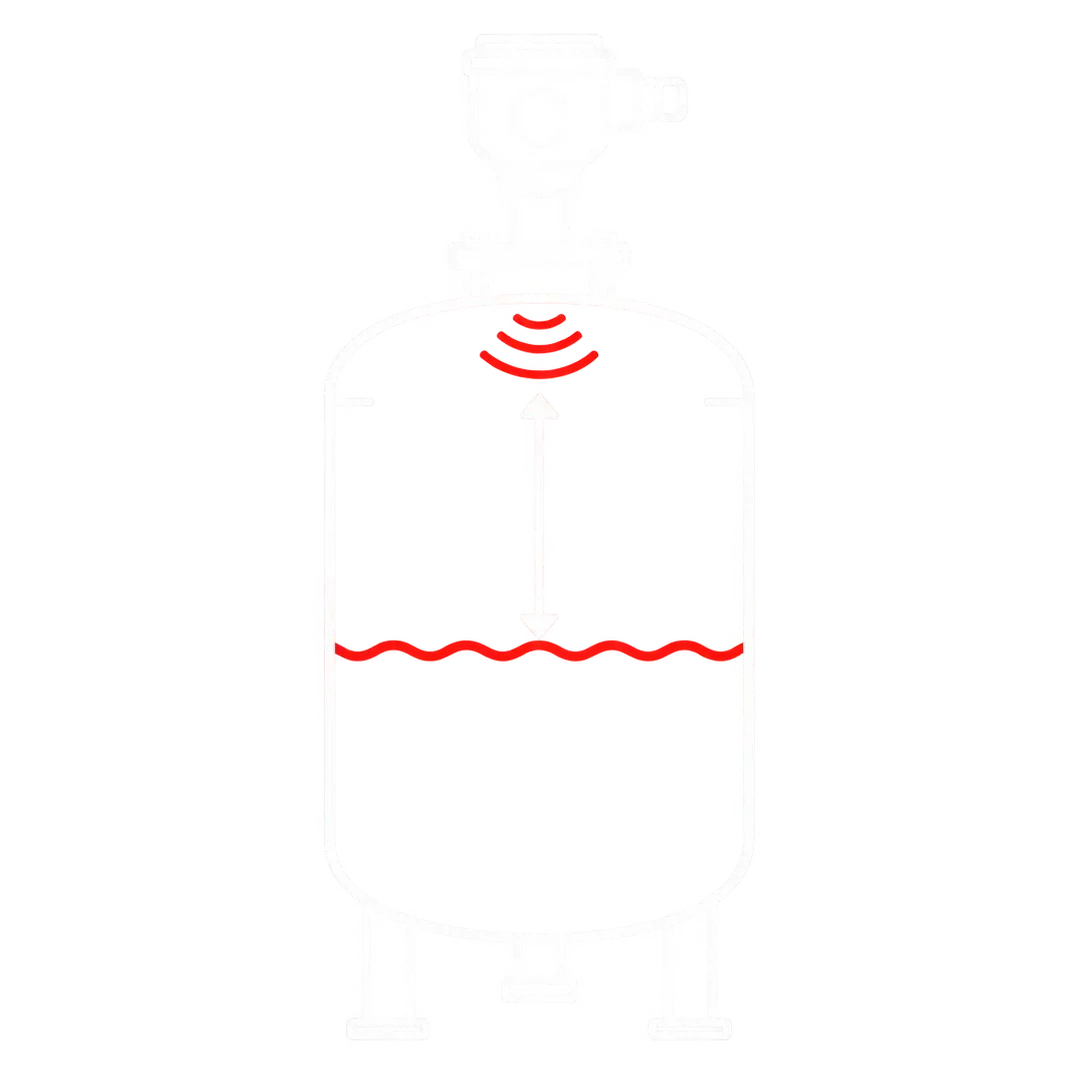
Guided wave radar is often a strong option for process vessels where vapor, pressure, temperature changes, or changing product characteristics can make other measurement methods less dependable. The technology sends a radar signal along a probe, allowing the instrument to measure the product interface with limited dependence on density or many other changing process variables.
Guided Wave Radar for Challenging Liquid Applications
Guided wave radar is often a strong option for process vessels where vapor, pressure, temperature changes, or changing product characteristics can make other measurement methods less dependable. The technology sends a radar signal along a probe, allowing the instrument to measure the product interface with limited dependence on density or many other changing process variables.
We evaluate probe configuration, vessel height, dielectric properties, buildup potential, interface requirements, and mounting geometry before specifying guided wave radar. For chemical processing, oil and gas, and other demanding industrial applications, the right configuration can provide stable continuous level data while minimizing the calibration concerns associated with technologies that depend more heavily on fluid density.
 Non-Contact Radar for Tanks, Silos, and Process Vessels
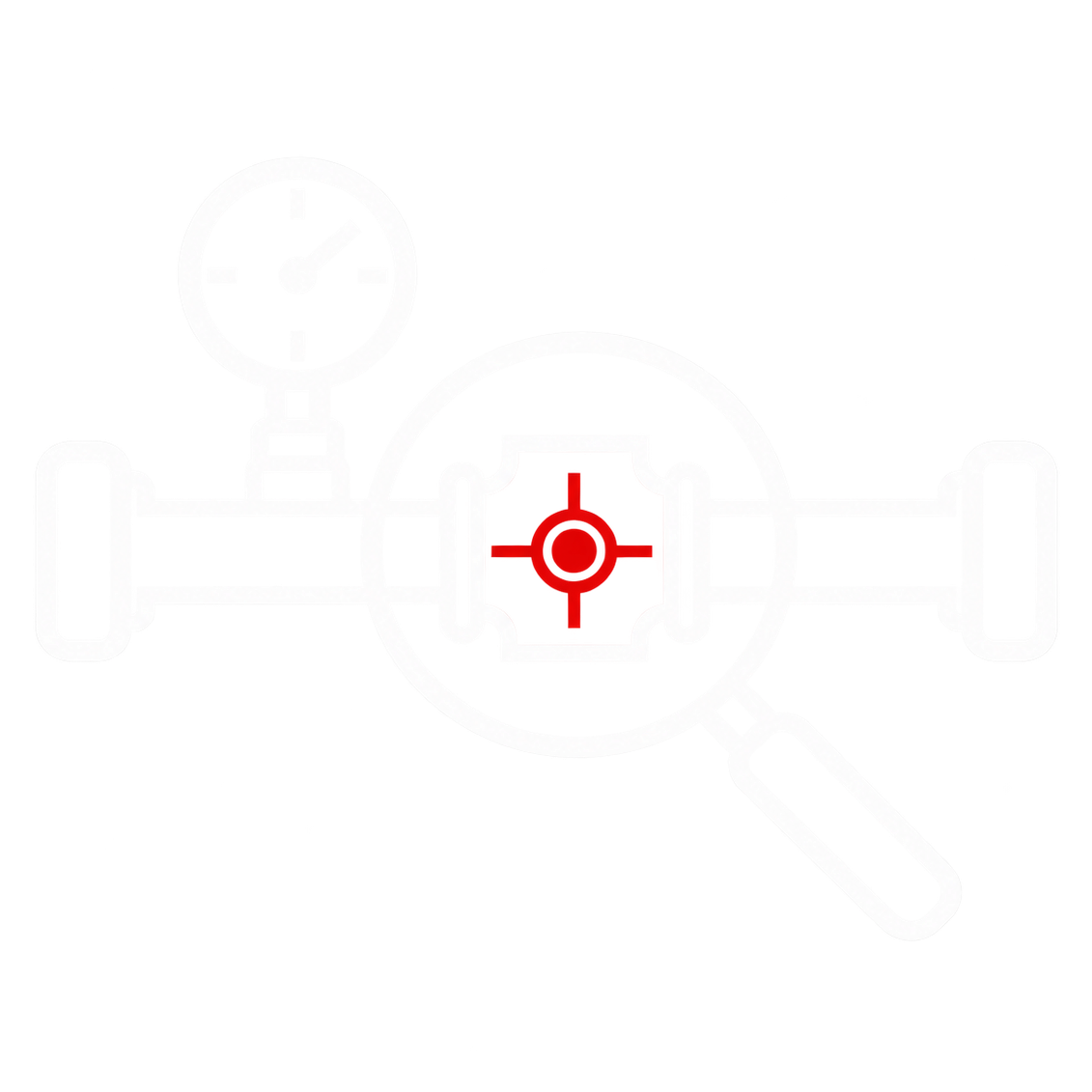
Non-contact radar can be useful when direct sensor contact with the process is undesirable or when aggressive chemicals, elevated temperatures, or moving material make mechanical technologies less practical. It can also be applied to bulk solids and powders where dust, uneven material surfaces, and changing fill patterns make level measurement more difficult.
Non-Contact Radar for Tanks, Silos, and Process Vessels
Non-contact radar can be useful when direct sensor contact with the process is undesirable or when aggressive chemicals, elevated temperatures, or moving material make mechanical technologies less practical. It can also be applied to bulk solids and powders where dust, uneven material surfaces, and changing fill patterns make level measurement more difficult.
Successful radar measurement still requires careful engineering. Vessel obstructions, agitators, internal piping, narrow nozzles, foam, low dielectric media, and material buildup can affect signal quality, so we review the installation environment rather than assuming radar is automatically the correct answer.
 Hydrostatic Level Measurement for Proven Reliability
Hydrostatic level measurement remains a practical, proven solution for many tanks, wells, sumps, and liquid-storage applications. By measuring the pressure generated by the liquid column, hydrostatic instruments can provide continuous level information with relatively straightforward installation and integration.
Hydrostatic Level Measurement for Proven Reliability
Hydrostatic level measurement remains a practical, proven solution for many tanks, wells, sumps, and liquid-storage applications. By measuring the pressure generated by the liquid column, hydrostatic instruments can provide continuous level information with relatively straightforward installation and integration.
The key is understanding density, temperature, vapor pressure, mounting elevation, and any pressure conditions inside the vessel. Our team evaluates those variables when specifying pressure-based level instrumentation so the measurement remains meaningful across the expected operating range rather than being distorted by process changes.
 Magnetostrictive and Other Precision Level Technologies
Applications requiring highly repeatable liquid level measurement may benefit from magnetostrictive technology, particularly where precise interface detection or inventory control is important. These systems can provide accurate position measurement using a float and waveguide arrangement, making them suitable for certain storage, chemical, and process applications.
Magnetostrictive and Other Precision Level Technologies
Applications requiring highly repeatable liquid level measurement may benefit from magnetostrictive technology, particularly where precise interface detection or inventory control is important. These systems can provide accurate position measurement using a float and waveguide arrangement, making them suitable for certain storage, chemical, and process applications.
We also work with other point and continuous level technologies when radar, hydrostatic, or magnetostrictive measurement is not the best fit. Capacitance, ultrasonic, float-based, and switching technologies each have appropriate applications, and our role is to determine which method fits the process rather than forcing every vessel into one technology family.
 Level Measurement for Aggressive and Difficult Media
Industrial level applications often become challenging because the product itself interferes with the sensor. Corrosive chemicals can attack wetted components, viscous liquids can coat probes, powders can generate dust, and agitation can create turbulent surfaces that produce unstable signals.
Level Measurement for Aggressive and Difficult Media
Industrial level applications often become challenging because the product itself interferes with the sensor. Corrosive chemicals can attack wetted components, viscous liquids can coat probes, powders can generate dust, and agitation can create turbulent surfaces that produce unstable signals.
We engineer solutions for aggressive chemical media, high-temperature and high-pressure vessels, viscous liquids, and bulk solids common throughout Tri-State manufacturing. Material compatibility, process connection, sensor coating, temperature rating, pressure rating, and hazardous-area requirements are all considered during specification so the selected instrument can survive the environment as well as measure it.
 Overcoming Foam, Vapor, Turbulence, and Buildup
Foam layers, dense vapor spaces, condensation, turbulence, and product accumulation are some of the most common reasons off-the-shelf level sensors underperform. A device may technically cover the vessel’s measurement range while still producing unreliable data because the sensing principle is poorly suited to the actual process.
Overcoming Foam, Vapor, Turbulence, and Buildup
Foam layers, dense vapor spaces, condensation, turbulence, and product accumulation are some of the most common reasons off-the-shelf level sensors underperform. A device may technically cover the vessel’s measurement range while still producing unreliable data because the sensing principle is poorly suited to the actual process.
Our engineers assess these interference conditions before equipment is selected. Depending on the application, the answer may involve changing sensing technology, probe style, frequency, mounting location, process connection, signal filtering, or device configuration to improve measurement stability and reduce false alarms.
 PLC and SCADA Integration From the Start
A level instrument is only useful if it communicates accurate, actionable data to the control system. We support integration with PLC, SCADA, and DCS environments using common industrial protocols and signals such as 4-20 mA HART, Modbus, and Profibus where supported by the selected equipment.
PLC and SCADA Integration From the Start
A level instrument is only useful if it communicates accurate, actionable data to the control system. We support integration with PLC, SCADA, and DCS environments using common industrial protocols and signals such as 4-20 mA HART, Modbus, and Profibus where supported by the selected equipment.
Our team can assist with scaling, communication settings, signal configuration, wiring considerations, and device parameters before commissioning. By addressing integration requirements during specification, we reduce the risk of discovering communication or configuration problems after the instrument has already been installed.
 Preventing Overfills, Dry-Running, and Process Interruptions
Inaccurate level data can create much larger operational consequences than a bad number on an HMI. Tank overfills can create safety and environmental issues, incorrect inventory measurements can disrupt production planning, and low-level errors can allow pumps to run dry and suffer mechanical damage.
Preventing Overfills, Dry-Running, and Process Interruptions
Inaccurate level data can create much larger operational consequences than a bad number on an HMI. Tank overfills can create safety and environmental issues, incorrect inventory measurements can disrupt production planning, and low-level errors can allow pumps to run dry and suffer mechanical damage.
Reliable measurement gives operators better visibility into actual vessel conditions and helps control systems respond at the correct time. By improving level accuracy and repeatability, facilities can reduce unnecessary shutdowns, protect equipment, maintain tighter inventory control, and support more stable process operation.
Onsite Field Support & Technical Services
Onsite Engineering Support Across the Tri-State Area
Some applications cannot be specified effectively from a datasheet or email alone. Vessel geometry, piping, mounting restrictions, process conditions, and existing instrument behavior may need to be examined in the field before the right solution becomes clear.
Read More
We provide onsite assessments, calibration support, and commissioning assistance throughout Greater Cincinnati, Northern Kentucky, and the surrounding industrial corridor. Our local presence gives facilities access to experienced engineering support without relying entirely on remote troubleshooting when a production-critical measurement point needs attention.
Calibration, Commissioning, and Startup Support
Proper commissioning is where instrumentation theory meets actual operating conditions. Even correctly selected equipment can perform poorly if scaling, mounting, damping, alarm thresholds, or communication parameters are wrong during startup.
Read More
We support field calibration verification, configuration, wiring review, and commissioning so devices are prepared to operate as intended within the larger control strategy. Our technical support continues after startup, giving maintenance and I&C teams a local resource when process conditions change or troubleshooting becomes necessary.
Safety and Hazardous-Area Considerations
Level instrumentation may operate in areas where flammable gases, vapors, dusts, or process hazards require additional engineering attention. We help customers evaluate products with appropriate hazardous-area certifications, including Class I, Division 1 or Division 2 requirements when applicable to the installation.
Read More
We can also support projects where SIL-rated equipment or safety-instrumented system considerations influence device selection. Product certification, installation practice, loop design, and site-specific safety requirements must all be reviewed together, so we focus on selecting instrumentation that aligns with the facility’s engineering and compliance framework rather than making assumptions based on a single specification.
Local Inventory and Reduced Downtime
When a critical level transmitter fails, long lead times can turn a maintenance issue into an extended production problem. Access to appropriate replacement equipment and knowledgeable local support can significantly reduce the time spent diagnosing, sourcing, and commissioning a replacement.
Read More
M. L. Johnson Company maintains access to critical instrumentation and regional engineering resources to help customers respond quickly when measurement problems affect operations. Because we already understand many of the applications and facilities we support, we can often move directly into technical evaluation instead of starting with basic discovery.
Why Plant Teams Choose M. L. Johnson Company
We have served industrial customers since 1964, giving our team more than 60 years of experience with process measurement and control applications. Our engineers work with respected instrumentation manufacturers and bring practical knowledge of water and wastewater, chemical processing, oil and gas, food and beverage, manufacturing, and other process-intensive industries across Ohio, Kentucky, Indiana, and West Virginia.
We also maintain industry involvement through organizations such as MCAA, ISA, and AWWA. That technical focus supports the same principle we bring to every application: specify the sensing technology around the process, verify the integration, and support the instrument throughout its operating life.
Our capabilities include:
- Guided wave radar level measurement
- Non-contact radar level transmitters
- Hydrostatic level measurement
- Magnetostrictive level systems
- Point level detection
- Bulk solids and powder measurement
- Chemical and corrosive-service instrumentation
- High-temperature and high-pressure applications
- PLC, SCADA, and DCS integration
- 4-20 mA HART, Modbus, and Profibus support
- Field calibration verification
- Commissioning and startup assistance
We evaluate the process medium, vessel geometry, pressure, temperature, dielectric properties, density, buildup, foam, turbulence, and required accuracy. Those conditions help us determine whether radar, guided wave radar, hydrostatic, magnetostrictive, or another technology is the better fit.
Yes, we work with level instrumentation designed for challenging chemical environments. Material compatibility, wetted components, coatings, temperature, pressure, and hazardous-area requirements are reviewed before we recommend a device.
Yes, we can engineer solutions for silos, bins, and other bulk-solid applications. Dust, angle of repose, material buildup, vessel height, and changing surface profiles are considered during sensor selection.
Yes, we support integration using industrial signals and protocols such as 4-20 mA HART, Modbus, and Profibus when available on the selected equipment. We can assist with device configuration, scaling, wiring, and commissioning.
Yes, we provide onsite application assessments, calibration verification, startup, and troubleshooting throughout the Greater Cincinnati and Northern Kentucky industrial corridor. Our local engineering presence helps reduce delays when production-critical instruments need attention.
Yes, we can help identify instrumentation with appropriate SIL ratings or hazardous-area certifications for the application. Final suitability depends on the complete system design, installation requirements, and facility-specific safety standards.
Engineer Level Measurement Around the Real Process
Reliable level measurement starts with understanding what is happening inside the vessel, not simply selecting a sensor with the correct range. At M. L. Johnson Company, we combine application engineering, proven level technologies, control-system integration, local field support, calibration, and commissioning to help industrial facilities reduce measurement uncertainty and avoid preventable downtime. Plus, with more than 60 years of process instrumentation experience, our team understands the technical demands facing plants across the Cincinnati and Tri-State industrial corridor. Simply contact us today to review your application, troubleshoot an existing level problem, or specify a measurement solution built around your actual operating conditions.